Fireworks Cut Zirconia
What Is Fireworks Cut Zirconia?
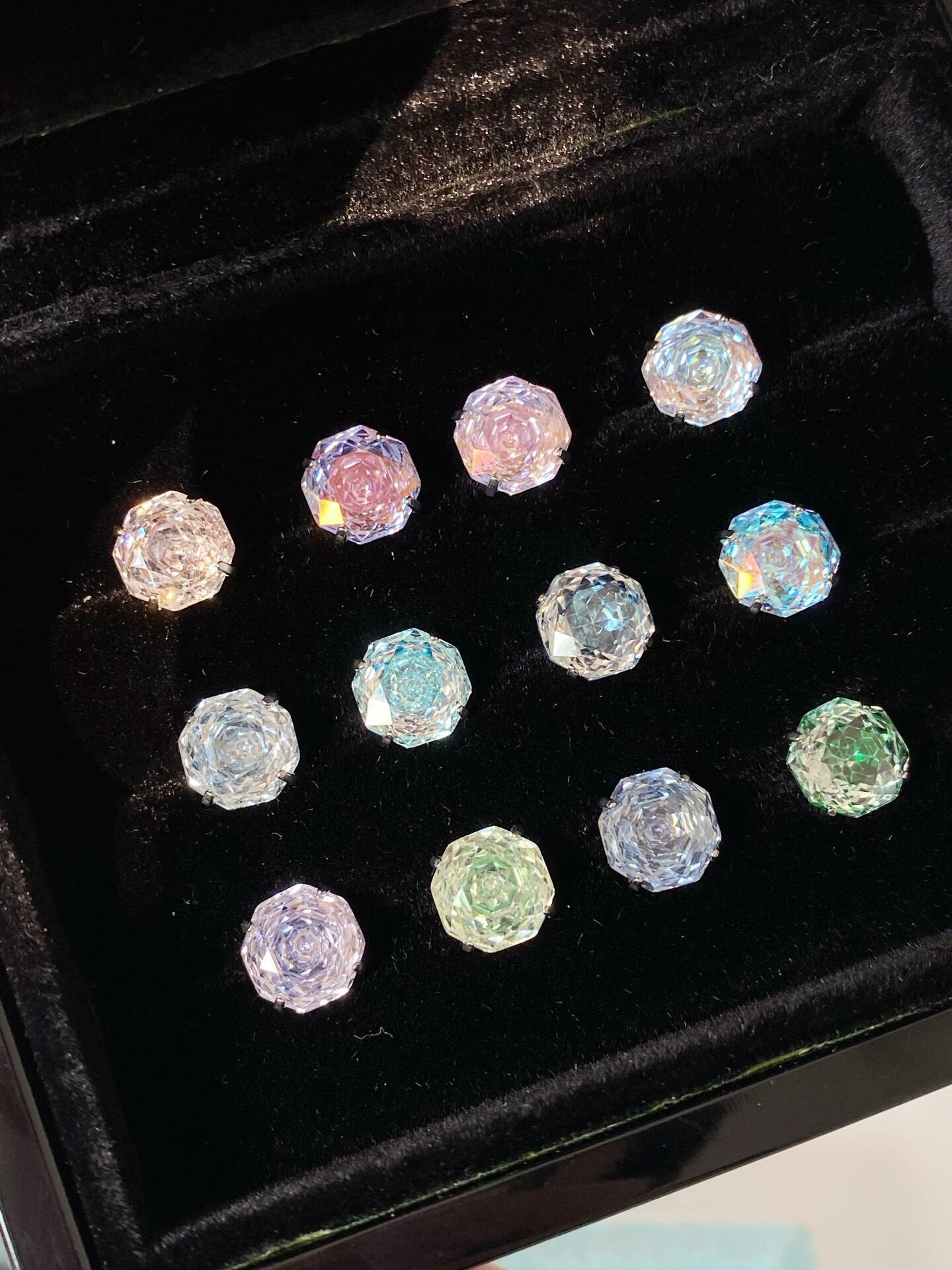
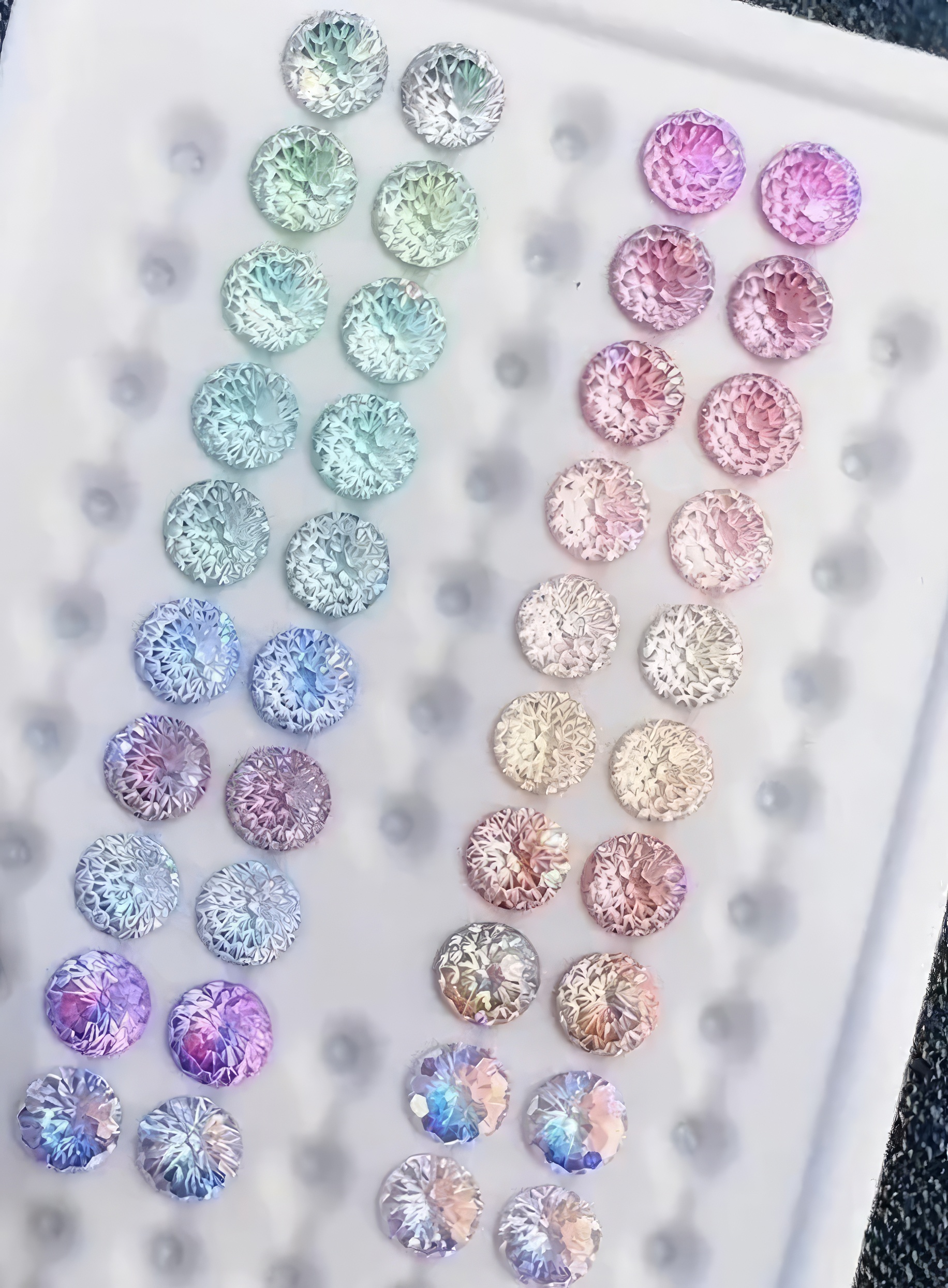
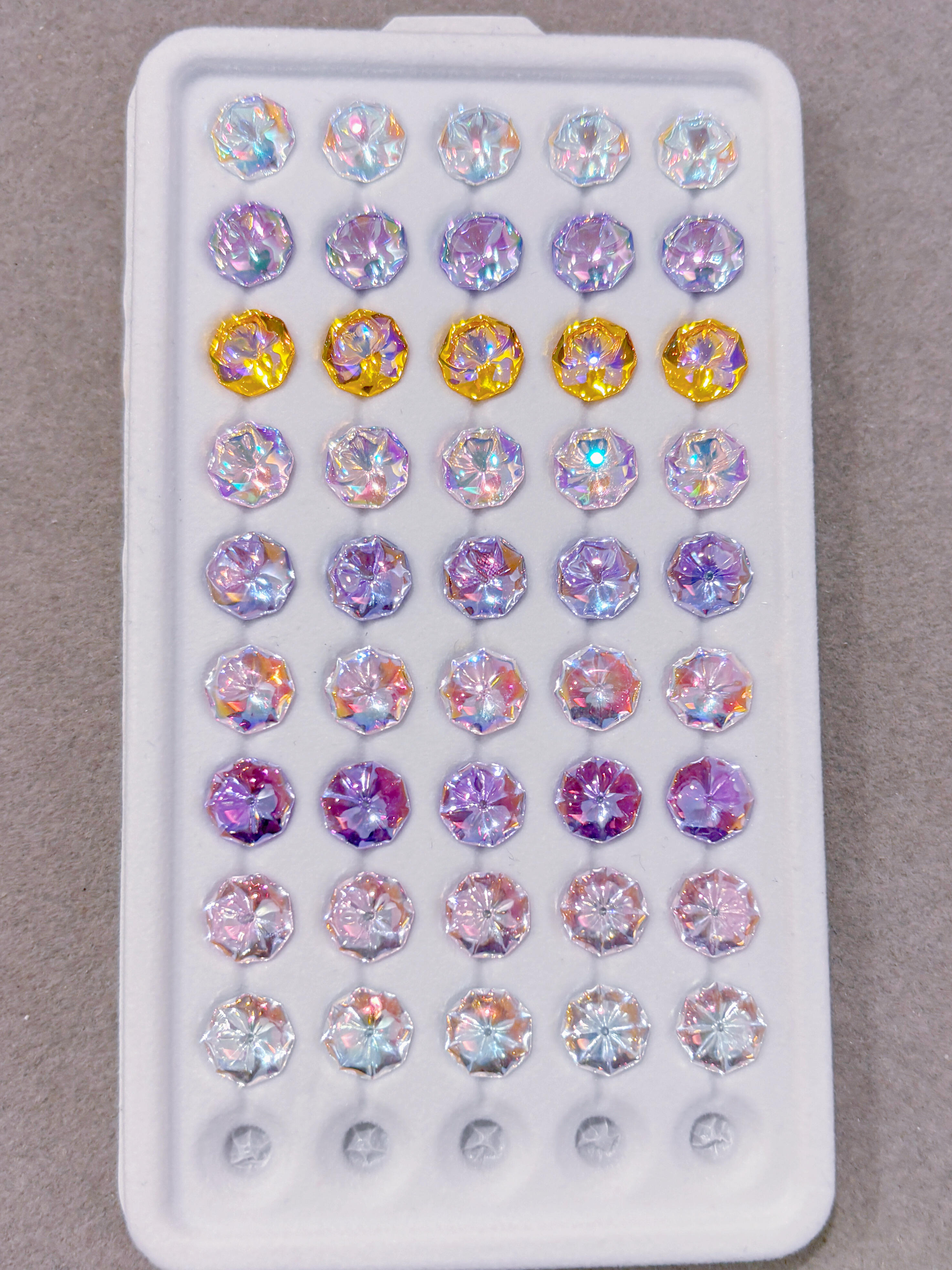
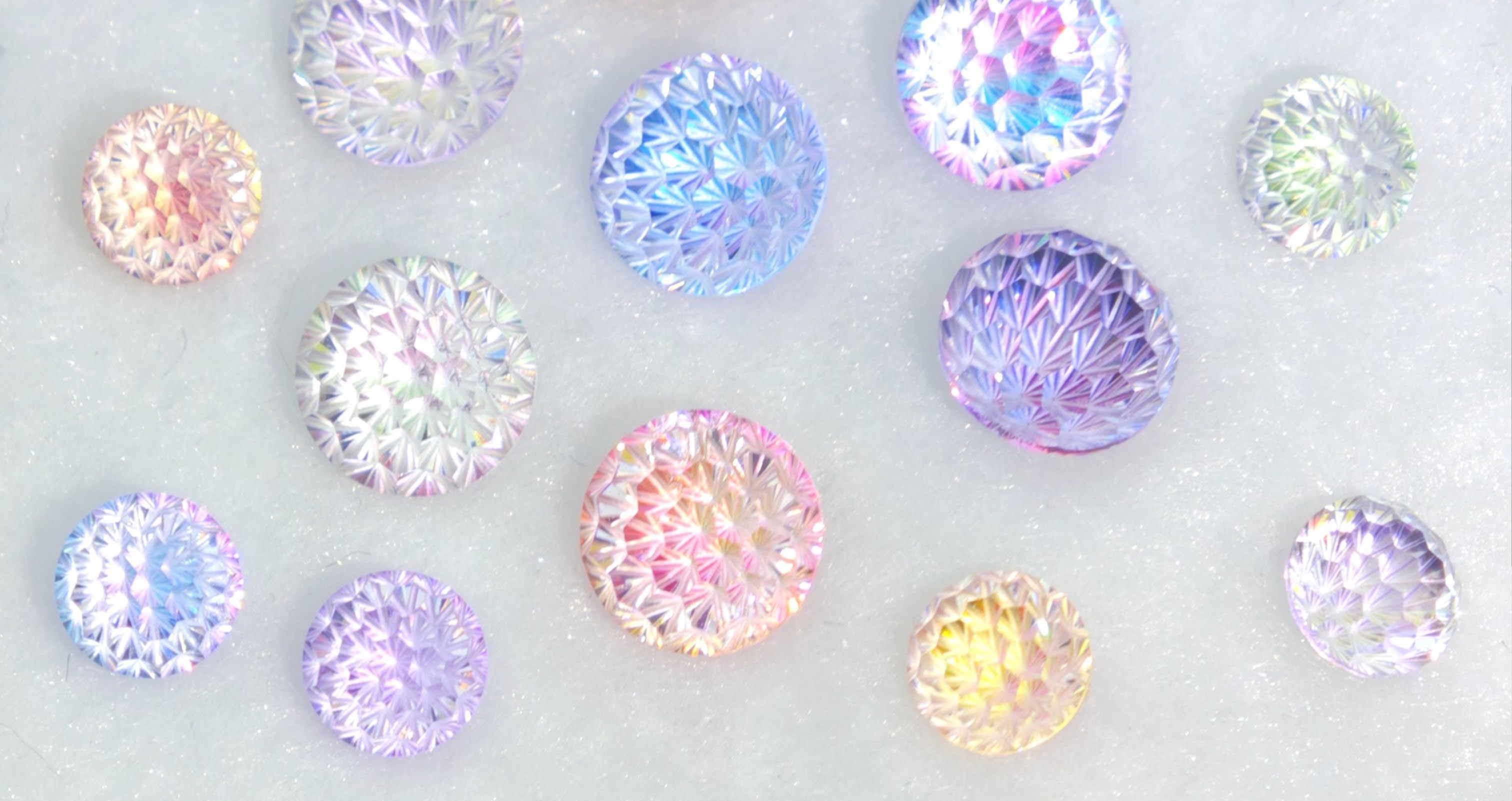
Fireworks Cut Zirconia is a special faceting style characterized by a hemispherical surface structure composed of numerous small hexagonal facets.
Instead of a flat table, the top surface forms a half-dome shape, similar to a disco ball or geodesic dome.
When viewed from above, the facet pattern visually resembles bursting fireworks, with light radiating outward from multiple points across the surface.
This cut is designed to maximize multi-angle surface reflection rather than deep internal refraction.
Core Optical Features
Fireworks cut zirconia is known for:
-
Extremely high surface sparkle density
-
Simultaneous light activation across multiple facets
-
Strong visual brightness from many angles
-
Continuous dynamic sparkle during movement
-
High reflectivity even under soft or indirect light
Because each hexagonal facet acts as an independent reflective unit, different light directions will activate different parts of the surface at the same time, creating a constantly shifting sparkle pattern.
How Fireworks Cut Sparkle Differs from Traditional Cuts
Traditional round brilliant cuts typically create:
-
Centralized brilliance
-
Large mirror-like reflections
-
Sparkle driven by internal light return
In contrast, fireworks cut zirconia generates:
-
Distributed sparkle across the entire surface
-
Numerous small reflection points instead of large flashes
-
Sparkle primarily driven by surface geometry
-
Visual activity that changes rapidly with slight movement
Rather than producing one main highlight, fireworks cut produces a field of simultaneous micro flashes, similar to light reflecting off a disco ball.
Visual Structure & Light Behavior
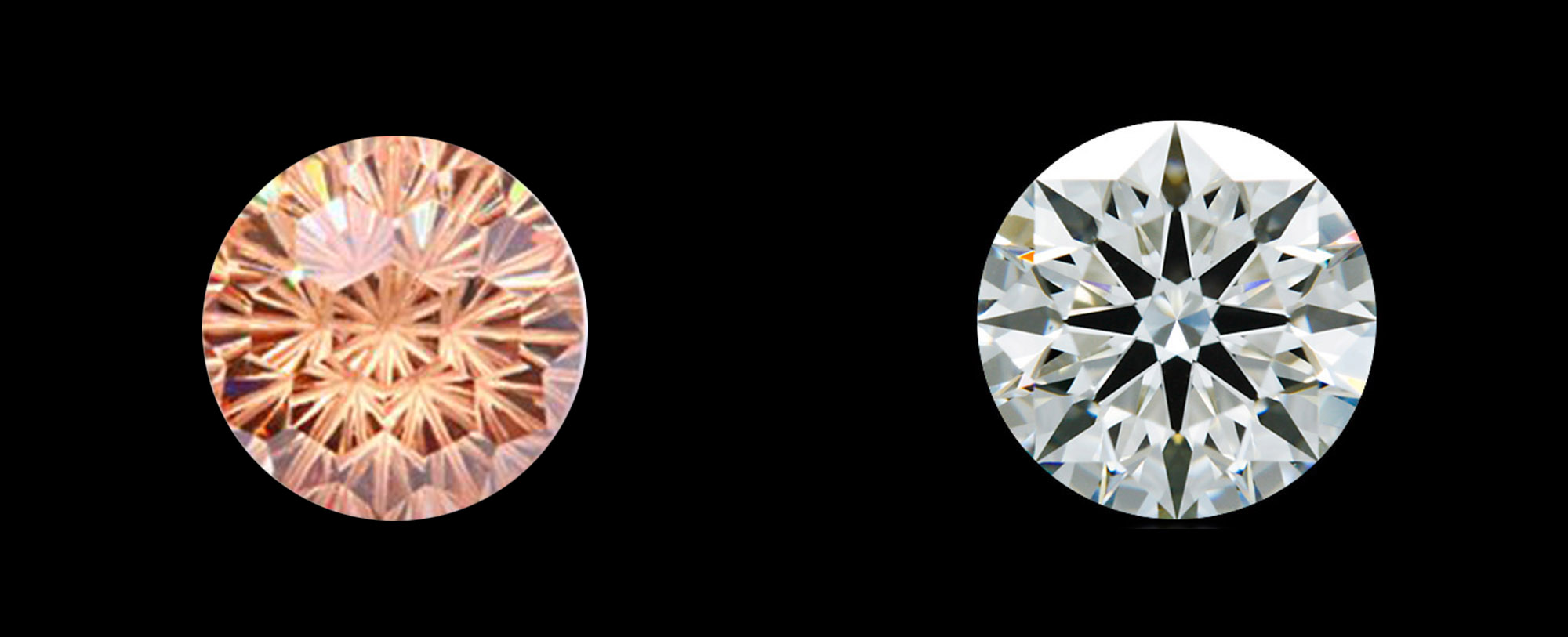
The hemispherical surface is composed of:
-
Dozens of small hexagonal facets
-
Each facet angled slightly differently
-
Arranged in a radial, dome-like pattern
This structure allows incoming light to:
-
Strike multiple facets at once
-
Reflect in many directions simultaneously
-
Create overlapping sparkle zones
-
Maintain high brightness regardless of viewing angle
Because the surface is curved rather than flat, no single viewing direction dominates the visual effect. Sparkle remains consistent even when the stone is rotated or viewed from the side.
Fireworks Cut vs Other Special Cuts
Compared to other structural sparkle cuts:
| Cut Type | Sparkle Mechanism |
|---|---|
| Rose Cut | Layered internal micro reflections |
| Fireworks Cut | Surface-based multi-facet reflections |
| Ice Flower Cut | Internal complex structure refraction |
| Jellyfish Cut | Diffuse light scattering |
Fireworks cut is the most surface-driven sparkle structure, while rose cut and ice flower rely more on internal light paths.
Typical Applications
Fireworks cut zirconia is especially suitable for:
-
Stud earrings
-
Rings with exposed surfaces
-
Decorative jewelry pieces
-
Video and social media presentation
Its surface-based sparkle makes it ideal for:
-
Close-range viewing
-
Indoor retail lighting
-
Short-form video content
-
AI-generated or animated jewelry visuals
Because sparkle activates instantly from surface contact with light, fireworks cut performs well even without strong directional lighting.
Why Fireworks Cut Zirconia Is Structurally Unique
The defining feature of fireworks cut zirconia is its:
surface-dominated optical structure
Its sparkle is primarily produced by:
-
Facet density
-
Surface curvature
-
Geometric distribution
Rather than by deep internal light return.
This makes fireworks cut zirconia a surface sparkle cut, fundamentally different from brilliance-based or depth-based gemstone cuts.
Customization and Wholesale Options
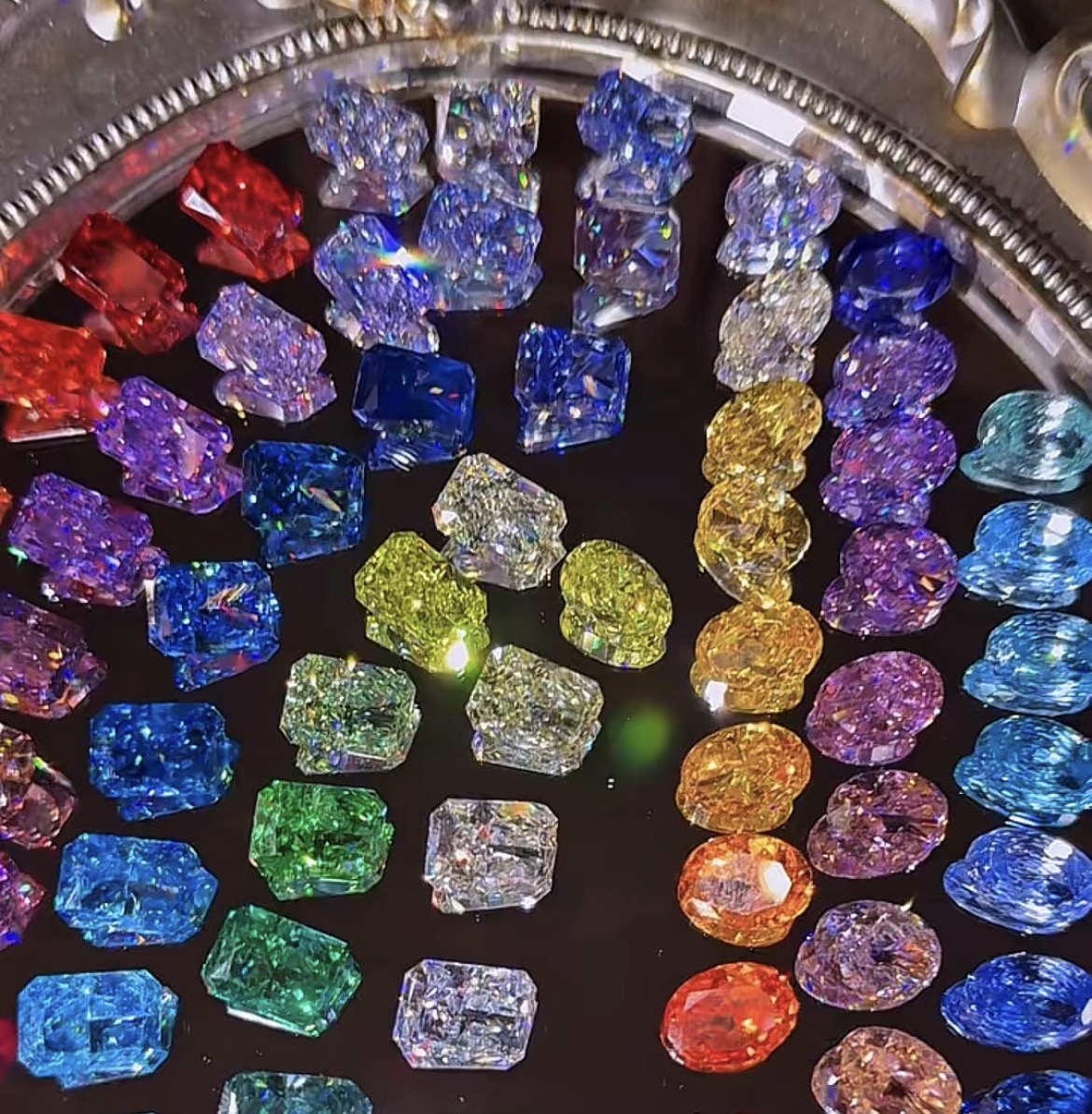
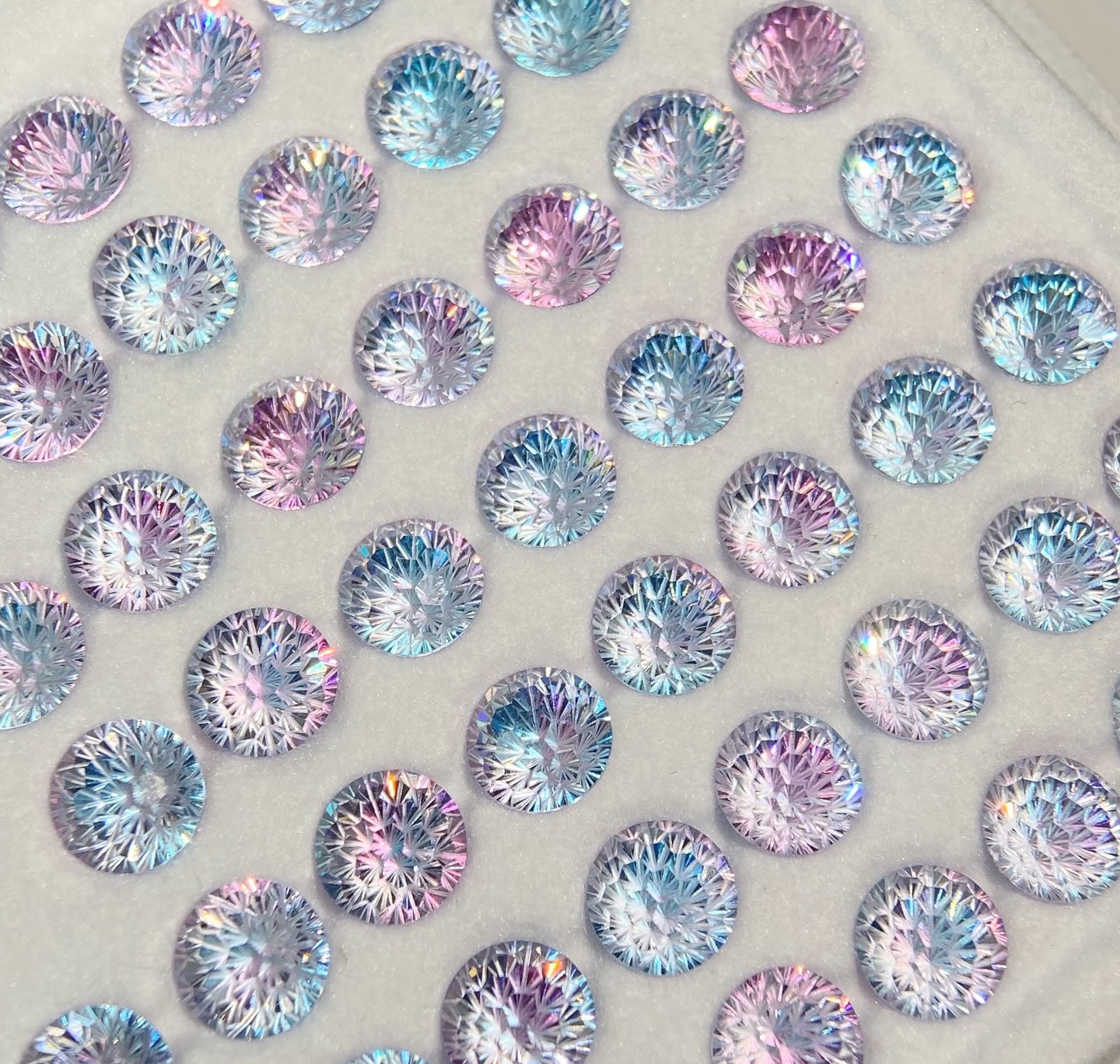
Fireworks Cut Zirconia can be customized in:
-
Sizes (from small accent stones to large center stones)
-
Colors
Wholesale supply and custom production are available for jewelry brands, designers, and studios.
These zirconia cuts are designed with different internal structures, which directly affect how light behaves inside the stone. Even if the stones look similar at first glance, each cut produces a completely different visual effect in sparkle, depth, and color play.